


Get Your Ford Truck Ready for Winter in Kalispell
If you’re driving a Ford truck in Kalispell, Montana, it’s time to prepare it before the brutal cold arrives. When temperatures drop below zero and snow piles up on the mountain passes, your truck needs to be winter-ready. Good winter preparation is about keeping safe and avoiding getting stranded miles from help on an icy road in the middle of nowhere.
Essential Winter Preparation Steps for Your Ford Truck in Kalispell
Kalispell winters punish Ford trucks with temperature swings and harsh conditions, especially across different elevations. Newer Fords have special features for cold weather. Some 2025 models have heated mirrors, rear defrosters, retractable running boards, rain-sensing wipers, heated seats and steering wheels, and intelligent four-wheel-drive systems. Ford recommends only a 20-second warm-up before driving, even at minus 20 degrees Fahrenheit. Pair these features with smart winter prep, and you’re on the right track.
Basic preparation includes protecting your truck’s fuel system, maintaining the battery and electrical systems, and checking the cooling system. It’s also vital to choose the right tires, make sure visibility is clear, and guard your Ford’s undercarriage.
Winterizing Your Ford Truck’s Fuel System
Cold conditions can destroy your fuel system, especially if your Ford has a diesel engine. Most problems, however, are preventable, so consider the following recommendations:
- Use winter-grade fuel and anti-gel additives: Diesel gelling happens when temperatures fall below 10-15 degrees Fahrenheit. Winter gas blends help with cold starts and combustion, so look for winter-grade fuel and anti-gel additives.
- Maintain and replace fuel filters: Clean filters prevent problems and ensure proper operation. Ford diesels have primary and secondary filters; make sure to replace these before winter, as the cold can turn any contamination into ice crystals.
- Keep your fuel tank full: Keep your tank at least half full to prevent fuel line freezing. Full tanks reduce air space where moisture forms and provide thermal stability, preventing condensation and expensive towing costs.
Battery and Electrical System Preparation
Montana winters can destroy electrical systems. Batteries lose around 60% of their power below zero degrees Fahrenheit, so cold-weather battery testing and maintenance are crucial. Your battery needs a minimum of 600 cold cranking amps. Clean your battery’s terminals, check for corrosion, load-test before winter comes, and make sure to replace questionable batteries.
Block heaters prevent cold starts without wasteful idling. Magnetic types stick to oil pans, and freeze plug types replace engine plugs. You can use a timer between two and four hours before starting the engine below 20 degrees Fahrenheit. If you have a Ford diesel truck, you should check your glow plugs, test plug resistance, and replace failures.
Cooling System Winter Protection
Montana winters demand solid cooling systems to prevent expensive engine damage. Your cooling system provides comfort inside the cabin and defrosting while managing the engine’s heat. If systems fail in winter, an engine replacement may be needed.
Antifreeze Testing and Replacement
Test your antifreeze with hydrometers or strips. If your coolant is cloudy, that means it’s contaminated and requires immediate attention. Different types of antifreeze shouldn’t be mixed without a complete flush. Ford trucks need specific formulas to protect aluminum parts and rubber seals. The wrong antifreeze can cause leaks, corrosion, and poor freeze protection. Use a 50/50 water-antifreeze mix to maintain your vehicle at the right temperature.
Radiator and Hose Inspection
Winter hoses face abuse from temperature swings and heating demands. Check for cracks, soft spots, or bulges, and look out for connections or clamps that loosen during temperature cycles. Winter radiators handle increased pressure and flow, so check for leaks, damaged fins, and clogs.
Tire and Traction Solutions for Montana Winters
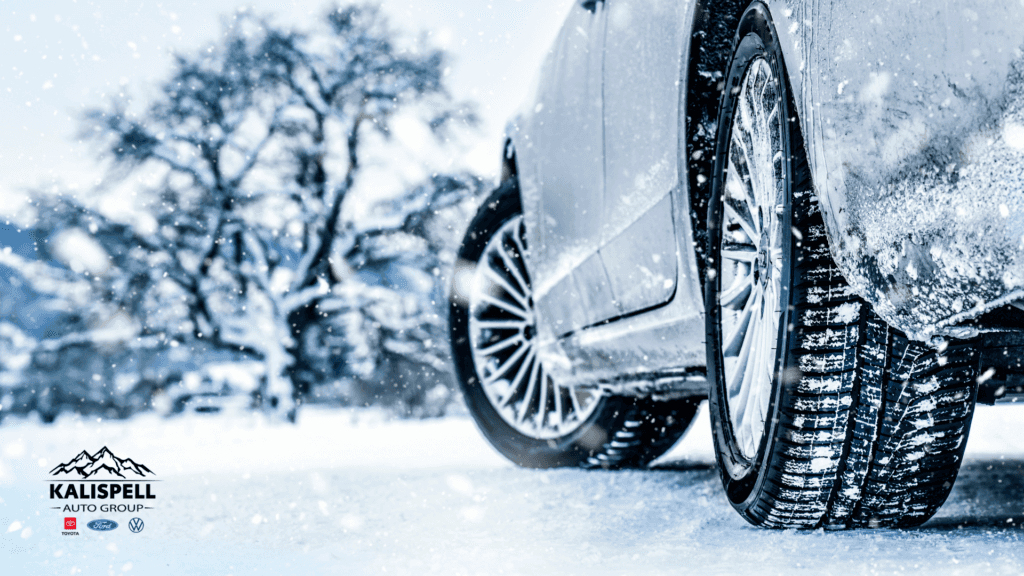
Every 10-degree temperature drop lowers tire pressure by 1 psi. Snow tires in Montana grip ice far better than all-season tires, as the rubber stays flexible in cold temperatures and tread patterns clear away snow and slush. All-season tires harden below 45 degrees Fahrenheit, losing grip when you need traction most. Even if you have a Ford F-150 Raptor, with its robust four-wheel-drive system, high ground clearance, heated seats, heated steering wheel, and advanced traction control, it still needs proper winter tires. Studded snow tires in Montana provide maximum ice grip but create noise and pavement wear.
Check your tire pressure manually once per week or even more frequently during temperature swings. Carry snow chains for areas such as Marias Pass, Homestake Pass, and Lookout Pass, and practice installation before storms hit. For emergencies, pack sand, traction mats, a shovel, a flashlight, flares, a first aid kit, extra clothes, food, and water. When using chains, only drive under 30 mph.
Windshield and Visibility Preparation
Clear vision can save lives during Montana winters, as snow, ice, and spray constantly challenge visibility when driving. Winter wipers have reinforced frames and special rubber to resist ice buildup, and blue washer fluid that’s rated for minus 20 degrees Fahrenheit is necessary for a winter truck. Winter driving burns through washer fluid quickly due to salt, sand, and slush, so fill reservoirs to the max and carry extra fluid. Running dry during storms creates dangerous visibility issues.
Test your Ford’s defrosting systems before winter to make sure the glass heats up evenly. Clean cabin air filters and check heating controls, as systems that work in the fall might fail during brutal winter conditions.
Undercarriage Protection and Washing
Montana roads attack truck undersides with salt, sand, and moisture. The rust that results damages your vehicle’s life span, but the danger often stays hidden until costly repairs are needed. Salt sneaks into cracks and weakens your Ford’s structural parts, damaging brake lines, fuel lines, and electrical connections. Rust issues greatly affect your vehicle’s reliability and safety.
You should apply a protective undercoating before winter, focusing on areas where factory coatings get damaged. Remember to wash your truck regularly to remove salt before permanent damage occurs, targeting the underside, wheel wells, and collection spots. Don’t wash in extremely cold weather when water freezes, but make sure salt doesn’t build up for weeks either.
Get Your Ford Truck Winter-Ready at Kalispell Ford
Don’t wait for the first storm to find out your truck isn’t ready for winter. Combine Ford’s winter-ready technology with professional preparation to get the reliable performance Montana winters demand. Our certified technicians understand Montana’s weather conditions and your Ford truck inside out, using tools and detailed checks to make the difference between reliable transportation and a dangerous breakdown. Call us at Kalispell Ford today to schedule your winter preparation service.
0 comment(s) so far on Get Your Ford Truck Ready for Winter in Kalispell