


Should I Let My Ford Truck Idle in the Montana Cold?
Those Kalispell winters hit hard, and when frost covers your Ford truck and temperatures drop below zero, you might wonder if you should run the engine a little before driving. This article will explore what happens when your truck idles in cold weather. We’ll also share practical warm-up methods that save fuel, examine how Montana’s harsh winter affects truck systems, and offer tips to keep your Ford running smoothly through the coldest months.
How Idling Impacts Your Ford Truck
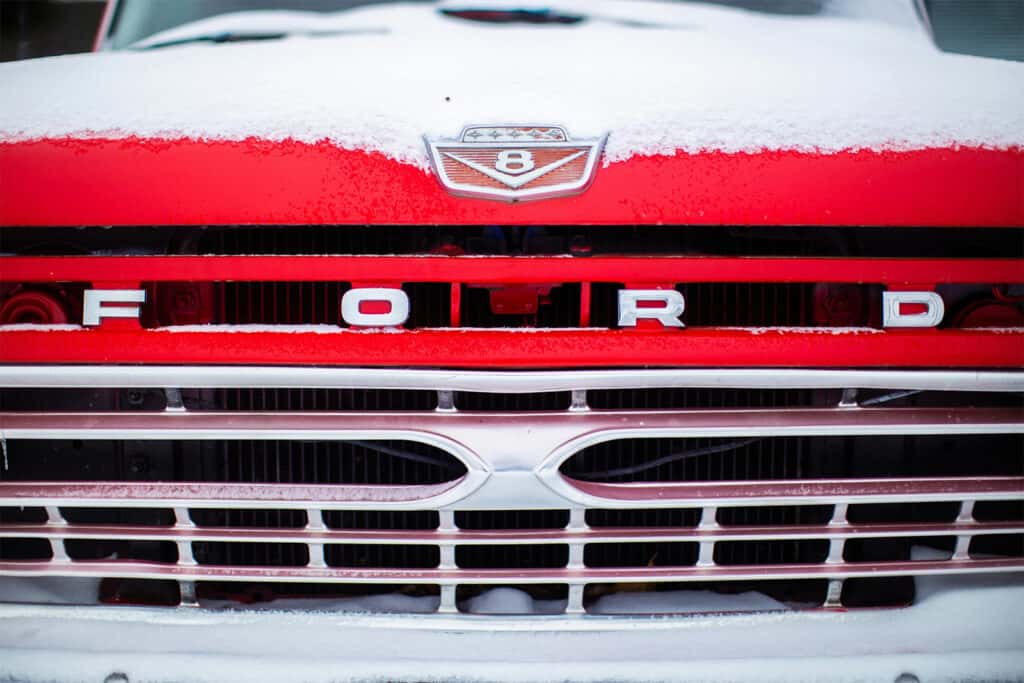
Front bumper of red vintage car by Caleb Oquendo is licensed with Pexels License
The fact is that the habit of letting trucks idle before driving is outdated. Your modern Ford isn’t like old trucks that needed 15 minutes to warm up. Today’s Fords come with technology that deems them ready to go almost immediately after start-up. Allowing your truck to sit burning fuel is costly and can hurt your engine rather than help it.
So, what happens during extended idling? Letting your truck idle reduces fuel economy and wears down the engine, which means possible repair costs further along the line. It also negatively impacts the environment, reducing air quality and contributing to climate change. You may even be breaking the law, with anti-idling laws varying by state, from 15-minute maximum idling times to no idling allowed at all.
Ford’s powertrain engineers say you only need about a 20-second warm-up before driving, even at -20 F. This helps protect your engine while reducing fuel waste during those cold Montana mornings.
What About Electric Vehicles?
Idling is less of a problem if your Kalispell ride is a Ford electric truck, but cold weather can significantly affect range. These trucks can lose roughly a third of their efficiency in freezing temperatures, so more careful planning is needed before trips around town or rides up to Whitefish during winter.
Warming Up Your Ford Truck: Best Practices
As we’ve mentioned, the real trick to warming a Ford in freezing temperatures is to start your engine, wait about 20 seconds (just enough time to buckle up), then drive gently away, avoiding the urge to race off. Driving slowly heats your engine faster, with the moving parts warming up while working rather than just spinning. This approach saves money and cuts pollution, and your neighbors will thank you for not filling the morning air with exhaust fumes.
Remote start is a feature that pays for itself in Montana’s extreme winters. Ford’s system lets you start your engine up to 300 feet away with your key fob, while newer models connect to smartphones, allowing you to set the heater and warm the cabin while finishing breakfast. Nothing beats climbing into a warm truck when it’s -10 F outside. But don’t overdo it. Give it just enough time to warm your truck without wasting fuel.
To warm up electric vehicles (EVs) on cold mornings, you can leave your truck plugged in overnight, not constantly charging, but allowing the battery system to maintain optimal temperature. Many EVs also have systems that heat the cabin and battery before driving. If you do this in the morning while the car is charging, you’ll get the best of both worlds — a fully charged battery and a warm cabin to climb into.
How Cold Affects Your Truck’s Systems
Idling aside, cold weather impacts nearly every system in your Ford, and understanding how helps you prevent breakdowns and avoid getting stranded between Kalispell and Bigfork. Let’s examine where the cold can hit your car the most and how you can support your Ford throughout the winter months.
Battery Power Loss
Your battery takes the biggest hit in cold weather. At just 32°F, practically t-shirt weather by January standards in these parts, batteries lose about 20% of their power. During those brutal below-zero mornings, that jumps to nearly 50% and explains why engines sound so sluggish on cold days — they’re working with only half their usual electrical power.
Oil Thickening
Cold can also thicken engine oil to a molasses-like consistency. Thick oil can’t flow properly, and systems are forced to work harder. The combination of thick oil and a weak battery can also strain your truck’s electrical system.
Tire Deflation
Tires also need extra attention. Every 10-degree drop in temperature lowers tire pressure by about 1 psi. A tire that’s perfectly inflated before the first cold snap might be dangerously low a few days later, so it’s a good idea to check tire pressure twice as often in winter.
Fuel Gelling
Diesel truck owners face another challenge — fuel gelling. When diesel temperatures fall low enough, wax crystals start to form, and diesel starts turning from liquid to gel, quickly clogging fuel filters. Using antigel additives and changing filters before winter prevents the nightmare of frozen fuel lines. Nobody wants diesel slush in their fuel system during a Kalispell cold snap.
Ford Trucks: Made for Montana Winters
At facilities such as the McKinley Climatic Lab in Florida, Ford trucks are subjected to extremely low temperatures, as low as -40 F, so the F-150 or Super Duty you ride has already survived worse conditions than anything Montana can throw at it.
Ford engineers design cold-start systems to reduce wear during those first crucial moments after ignition. So, while it might feel wrong to drive off immediately, you’re actually following Ford’s design intentions.
Many newer Ford truck models include winter features that seem custom-made for Kalispell living. Most 2025 models have available heated mirrors to melt the ice, rear window defrosters, retractable running boards that won’t jam with snow, rain-sensing wipers, heated steering wheels, and those wonderful, heated seats that make morning drives more bearable.
Ford truck models from 2023 onward also have an intelligent four-wheel-drive system that adjusts traction automatically as you transfer from cleared highways to snow-packed side streets. While navigating that slippery hill with freshly laid snow on Highway 93, you’ll surely appreciate every bit of that Ford engineering.
Get Your Truck Ready for Winter at Kalispell Ford
Whether electric or gas, trucks need extra care in winter. If you have questions about winterizing your Ford or need help preparing for cold weather, contact us or visit our service team at Kalispell Ford.
Our technicians know what local trucks face during winter and can spot possible problems before you get stuck on a snowy back road. There’s no substitute for knowledge from an experienced local professional to keep your truck running at its best through Montana winters.
0 comment(s) so far on Should I Let My Ford Truck Idle in the Montana Cold?