


Comparing the Ford E Transit and the Ford Transit
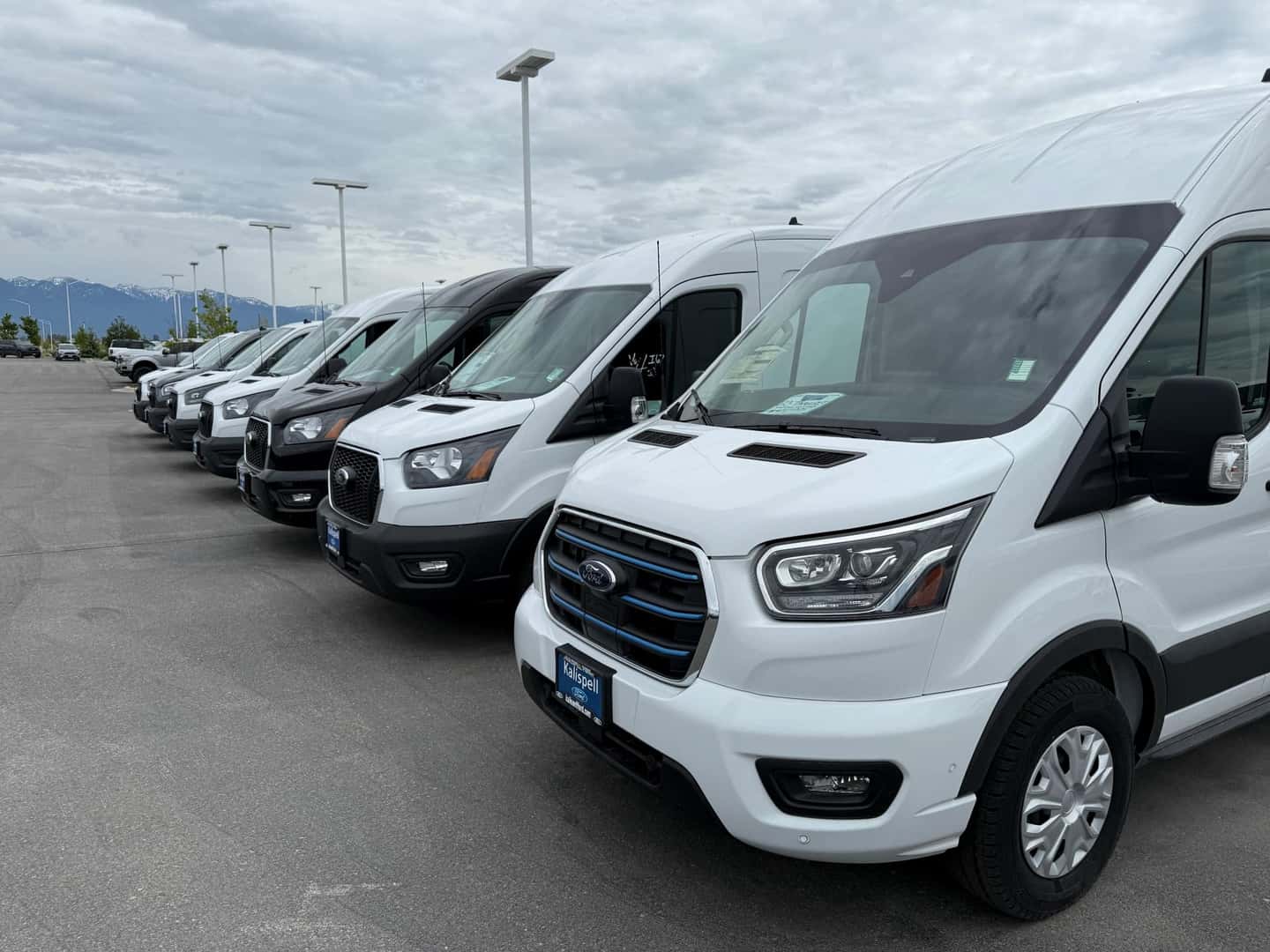
Ford E Transit vs Ford Transit: Which Van Fits Your Business Needs
At Kalispell Ford, we understand that choosing the right commercial van is essential for your bottom line. The Ford E Transit and the standard Ford Transit both offer impressive capabilities, but they serve very different needs. Whether you’re managing a delivery fleet or running a mobile service operation, it’s important to choose the van that aligns with your goals, budget, and daily demands.
Performance and Fuel Efficiency
The biggest difference between the E Transit and the standard Transit lies in the powertrain. The E Transit is fully electric, powered by a 68 kWh battery. It offers an estimated range of up to 126 miles on a full charge. It’s ideal for local routes, predictable daily mileage, and businesses looking to reduce fuel costs and emissions.
The standard Ford Transit comes with a 3.5 liter V6 engine, available in both naturally aspirated and EcoBoost variants. It offers more range flexibility with fuel stations everywhere. It can handle long-distance hauling without the need for charging stops. For rural operations or cross-state travel, the gas-powered Transit remains a workhorse.
Pricing and Incentives
The E Transit starts at around 51,000 dollars, but federal and state EV incentives can significantly lower the effective cost. Lower maintenance costs and fuel savings also add up over time. The standard Transit starts closer to 46,000 dollars and remains more affordable up front, especially for businesses not ready to invest in EV infrastructure.
Size and Payload
Both models are available in cargo van, chassis cab, and cutaway configurations with multiple roof heights and lengths. Payload capacity is comparable: the E Transit supports up to 3,800 pounds while the standard Transit can handle up to 4,500 pounds depending on the configuration. Interior dimensions remain largely the same between the two models. The standard Transit offers nearly 230 cubic feet of space on the low end and up to 445 cubic feet depending on the trim.
Charging vs Refueling
Charging infrastructure is the deciding factor for many buyers. The E Transit supports both Level 2 and DC fast charging. With a Ford Pro charging solution, fleet managers can optimize energy use and charge vehicles overnight at a lower cost. The gas-powered Transit is ready to go as long as there is a pump nearby. No planning is required. Here in the Flathead Valley, Kalispell Ford dealer has a handful of fast chargers on site to help facilitate the switch towards full electric.
Best Use Cases
The E Transit excels in urban deliveries, local contractors, tech companies, and businesses committed to sustainability. Quiet operation, lower operating costs, and zero tailpipe emissions make it perfect for city routes and environmentally conscious clients.
The standard Transit is better suited for rural operations, long-haul logistics, HVAC and plumbing businesses with unpredictable routes, and any job where reliability and range are non-negotiable.
Final Verdict
If your routes are local and predictable, the E Transit offers a forward-thinking solution with long-term savings. If you need flexibility, long-range performance, or operate in areas without charging infrastructure, the standard Transit remains a reliable and capable choice.
Stop by Kalispell Ford, one of the best new and used dealers in the Flathead Valley, to test drive both models and find the right tool for your business.
0 comment(s) so far on Comparing the Ford E Transit and the Ford Transit