


Winter Tires in Kalispell: When to Switch and Why They Matter
Winter Tires in Kalispell: When to Switch and Why They Matter
Winter in Kalispell, Montana, brings freezing temperatures, snow-covered roads, icy intersections, and changing driving conditions throughout the Flathead Valley. Whether you’re commuting through town, driving Highway 93, or heading toward Whitefish and Columbia Falls, having the right tires can make a significant difference in your vehicle’s winter performance.
Winter tires are designed to provide better traction, braking, and handling in cold conditions than typical all-season tires. For many Montana drivers, switching to winter tires before consistent snowfall and freezing temperatures arrive is an important part of preparing for the season.
Why Winter Tires Matter in Kalispell
Montana winters can be unpredictable. Roads that are clear in the morning may become snow-covered or icy by the afternoon, and temperatures can drop quickly as weather systems move through the region.
Winter tires are engineered specifically for these conditions. Unlike all-season tires, they use specialized rubber compounds that remain more flexible in cold weather, helping the tires maintain contact with the road.
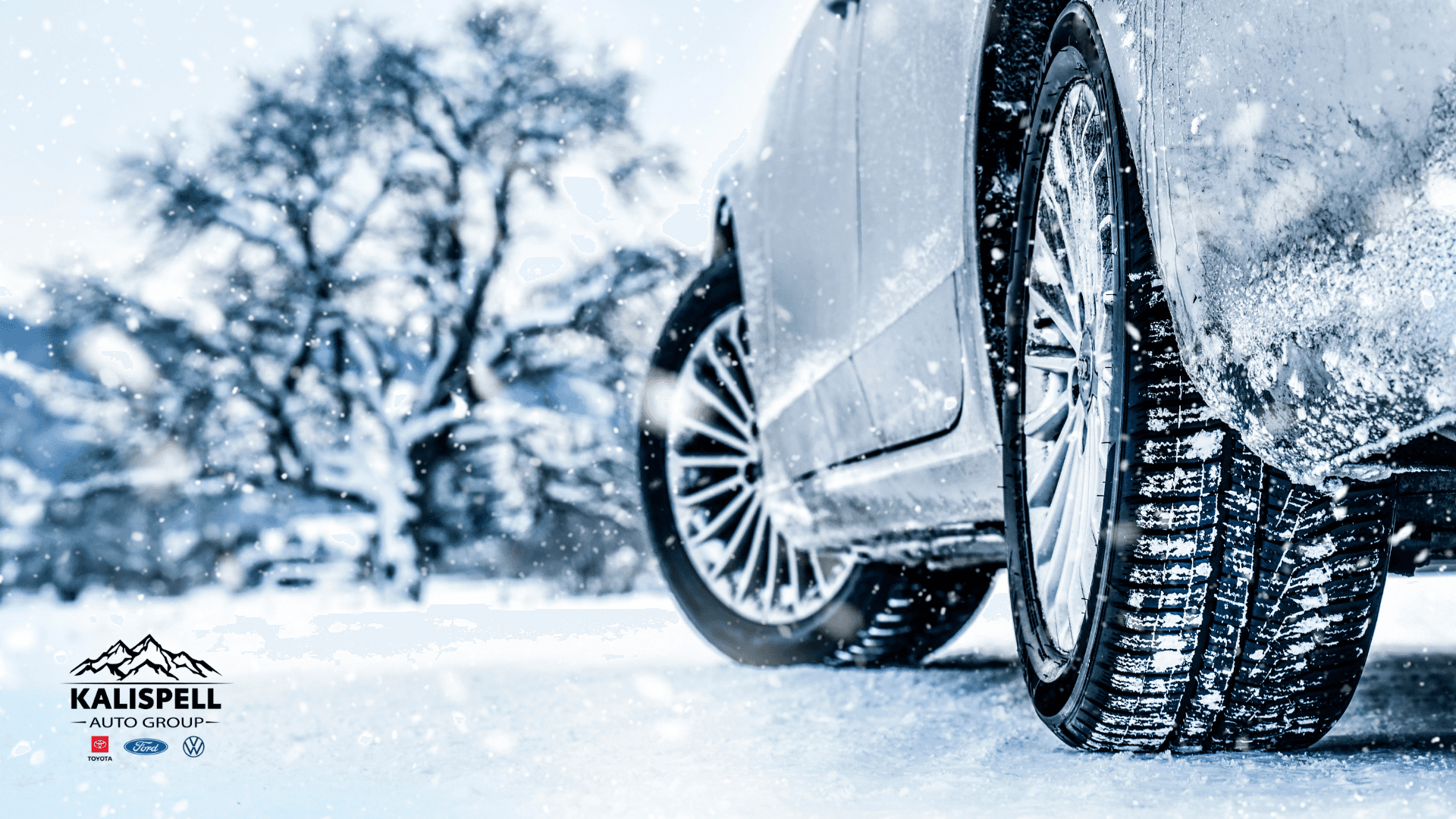
Winter tires also feature tread patterns and biting edges designed to grip snow and improve traction on slippery surfaces. This can help drivers accelerate, corner, and brake with greater control when winter weather arrives.
Even if your Ford has four-wheel drive or all-wheel drive, winter tires can provide an important advantage. These systems can help deliver power to the wheels, but they do not eliminate the need for adequate tire traction when braking or turning.
When Should You Install Winter Tires in Kalispell?
For most drivers in the Flathead Valley, fall is the ideal time to start planning a winter tire changeover.
A useful guideline is to consider switching when temperatures consistently approach or fall below 45°F. Winter tire rubber is designed to perform in colder conditions, while many all-season tires become less flexible as temperatures drop.
Rather than waiting for the first major snowstorm, consider scheduling your tire changeover in October or early November, depending on the forecast and your driving habits.
If you regularly travel mountain roads, commute early in the morning, or drive outside Kalispell, installing winter tires before severe weather arrives can help you prepare for changing road conditions.
Winter Tires vs. All-Season Tires
Choosing between winter and all-season tires depends on where you drive and how you use your vehicle.
Winter tires are designed for cold temperatures, snow, and icy conditions. They typically provide better winter traction and braking performance, making them a strong choice for drivers who regularly face Montana’s harsh winter weather.
All-season tires are designed to provide balanced performance in a wider range of conditions, including mild winter weather. However, they generally cannot match dedicated winter tires in severe cold, snow, and ice.
For drivers who experience long winters or regularly travel rural roads around Kalispell, a dedicated set of winter tires may be worth the added cost and seasonal changeover.
Do Ford Trucks and SUVs Need Winter Tires?
Vehicles like the Ford F-150, Ford Bronco, Ford Bronco Sport, and Ford Explorer offer features that can help drivers handle challenging road conditions. Depending on the model and configuration, these may include four-wheel drive, all-wheel drive, and selectable drive modes.
However, your tires remain the primary point of contact between your vehicle and the road.
Winter tires can help Ford drivers get more traction in cold weather, including when accelerating from a stop or navigating snow-covered streets. They can also improve braking and cornering performance compared with less suitable tires in winter conditions.
When choosing winter tires for your Ford, make sure the size, load rating, and specifications match your vehicle’s requirements. This is especially important for trucks that carry heavy loads or tow trailers.
Other Ways to Prepare Your Tires for Montana Winter
Winter tires are only one part of safe winter driving. Before temperatures drop, take a few minutes to inspect your current tires and prepare your vehicle.
- Check tread depth: Adequate tread helps tires grip snow and move water away from the contact patch. Winter driving may require more tread than the legal minimum.
- Check tire pressure: Cold weather lowers tire pressure, so inspect your tires regularly and follow the recommended pressure listed on your driver’s door-jamb label.
- Inspect for damage: Look for cracks, uneven wear, bulges, or other signs that your tires may need replacement.
- Consider a full set: Installing four matching winter tires generally provides more balanced handling than mixing winter tires with other tire types.
- Plan your changeover early: Scheduling ahead can help you avoid the seasonal rush when the first significant snowfall hits the Flathead Valley.
Remember that even the best winter tires cannot eliminate the risks of black ice, reduced visibility, or excessive speed. Leave extra following distance and adjust your driving to the conditions.
Get Your Ford Ready for Winter at Kalispell Ford
Preparing for winter starts before the snow begins to fall. The right tires, proper tire maintenance, and a vehicle suited to your driving needs can help you approach Montana’s winter roads with greater confidence.
Whether you drive a Ford F-150 for work, a Bronco for outdoor adventures, or an Explorer for everyday family travel, choosing the right tires is an important step in your seasonal maintenance routine.
Visit Kalispell Ford to explore your vehicle’s maintenance needs and get ready for the colder months. Our team can help you determine what to consider when selecting tires for your Ford and preparing for winter driving in Kalispell and the surrounding Flathead Valley.
Start your winter preparation early and be ready for whatever Montana’s weather brings.
0 comment(s) so far on Winter Tires in Kalispell: When to Switch and Why They Matter