


Is Your Ford Blowing White, Blue, or Black Smoke? Tips for Kalispell Drivers
If you’ve spotted colored smoke puffing from your Ford’s tailpipe, don’t panic, but don’t ignore it either. Montana’s brutal cold snaps and rugged mountain roads can really do a number on your engine systems, and those smoke signals are your truck’s way of waving a red flag. Knowing what these different smoke colors mean can save you from a hefty repair bill and keep your Ford running strong. To learn more about what the different smoke colors mean and how to fix them, check out this guide from our team at Kalispell Ford.
Exhaust Smoke Colors and What they Mean
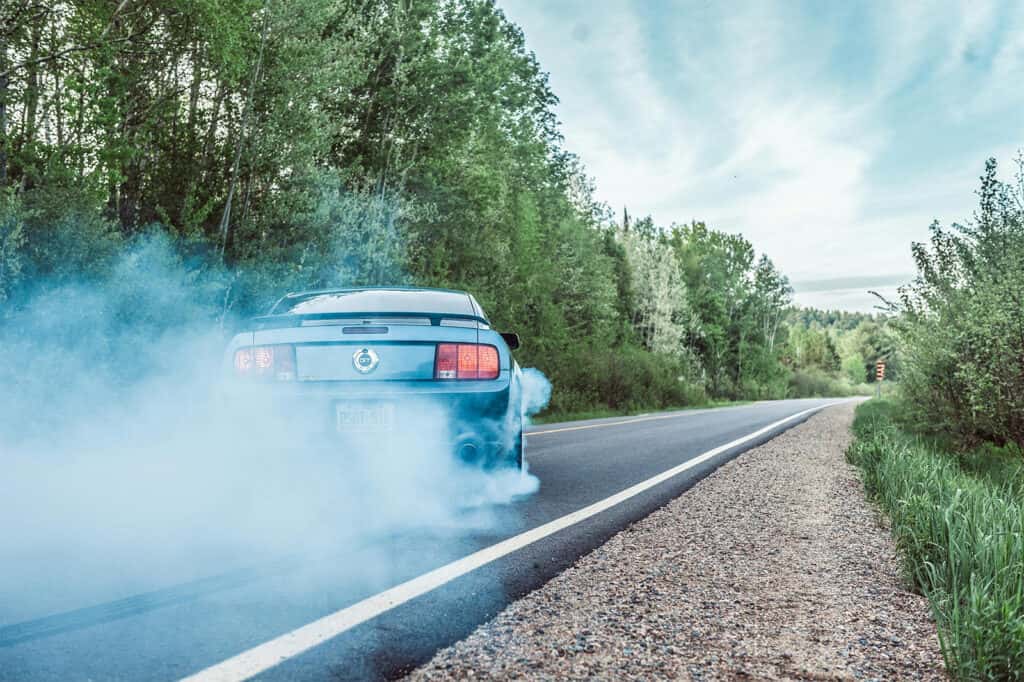
Photo Of Automobile During Daytime by Harrison Haines is licensed with Pexels License
Your Ford’s exhaust tells you what’s happening under the hood. Normal exhaust emissions should be relatively clear with minimal visible vapor, especially on warm days. When there’s colored smoke, it means something besides fuel and air is burning where it shouldn’t be.
White, blue, and black are the three most common exhaust smoke colors. Visible smoke can cause you to fail emissions tests and even have your registration suspended for hydrocarbon violations. With Kalispell’s remote roads and moody weather, catching problems early can save you from heavy fines and repair costs.
White Exhaust Smoke
If your car exhaust has white smoke, it can either be normal or a sign of trouble. If you only see thin white vapor on cold mornings, that’s fine. It’s normal condensation that will disappear after your car warms up. But if thick, sweet-smelling clouds persist, that means coolant’s leaking into your combustion chamber from a blown head gasket, cracked engine block, or damaged cylinder. When this happens, pull over and call for help.
Professional head gasket repairs run from $1,000-$3,000 for standard vehicles and $3,000-$5,000 for luxury models. Head gasket replacement typically costs $2,000-$6,000 total, with parts around $800 and labor $1,100-$1,400. Head gaskets typically last over 100,000 miles and can endure high pressure and intense heat.
Keep in mind that Montana’s brutal cold can make normal condensation appear more dramatic. Strenuous tasks such as hauling, towing, and plowing are hard on gaskets, causing white smoke to appear sooner.
Blue Exhaust Smoke
Blue smoke coming out of the exhaust means oil is burning in your combustion chamber. This bluish-gray smoke has a distinct burned-oil smell. Don’t ignore it. Blue smoke means your engine parts have worn down, and oil is leaking through the seals and gaskets. While you might limp home with light blue smoke, this problem can quickly worsen and lead to your engine seizing up if oil levels drop too low.
Blue smoke during acceleration may indicate a damaged piston ring, while blue smoke during deceleration suggests possible damage to the cylinder head valve guide. Common causes include old engine seals, damaged rings, leaky valve stem seals, blown head gaskets, and busted turbochargers. Blue smoke is also more common in older vehicles or high-mileage engines due to increased wear and tear. If you’re an off-roading enthusiast, rough terrain can cause your engine’s systems to break down over time, leading to blue smoke.
Black Exhaust Smoke
Black smoke from the exhaust results from imbalanced fuel-to-air ratios where the combustion chamber receives too much fuel relative to the available air. Primary causes include faulty fuel injectors with improper opening/closing cycles, dirty air filters, and malfunctioning mass airflow sensors disrupting fuel injection calculations. Black exhaust signals potential mechanical issues, and ignoring the symptoms can lead to extensive and expensive damage.
Dusty roads and seasonal debris clog air filters faster, making regular changes a necessity. Additionally, diesel and turbocharged Fords may experience issues with turbo components or failures in the exhaust gas recirculation system.
Black smoke reduces fuel efficiency, increases particulate emissions, and limits mechanical energy production. However, modern Fords with advanced engine computers should rarely produce black smoke under normal conditions.
Preventive Tips for Kalispell Drivers
If you’re not sure where to start, below is a quick overview of proactive maintenance tasks that will help keep your Ford on the road longer:
- Change the air filters frequently.
- Get regular oil changes with proper cold-weather viscosity oil.
- Clean the fuel injectors periodically.
- Replace the PCV valve.
- Use high-quality fuel and additives with polyetheramine to reduce carbon deposits.
- Prepare your cooling system for extreme temperatures.
- Use Ford-approved fluids and parts, and follow the recommended maintenance schedule.
When To Seek Professional Help
If you’ve already tried basic maintenance, such as changing out air filters, and you’re still seeing colored smoke, it’s time to seek professional assistance. Commercial automotive smoke leak detectors can test your car’s systems with pinpoint accuracy to troubleshoot what’s causing the smoke, whether it’s the evaporative emission control system, intake, coolant, exhaust, or something else entirely.
Five-gas exhaust analyzers measure carbon monoxide, carbon dioxide, nitrogen oxides, oxygen, and hydrocarbons to assess your engine’s performance and efficiency. Automotive experts use exhaust gas analyzers for dynamic road testing, fuel and emission diagnostics, carburetor balance checks, catalytic converter evaluation, and leak detection.
Ford-specific issues require specialized knowledge and experience, so it’s important to take your Ford to a trusted dealership. At Kalispell Ford, our team of expert technicians is here to help.
Expert Ford Service in Kalispell
Knowing what different exhaust smoke colors mean gives you control over your Ford’s care and longevity. Each situation calls for different levels of urgency, so don’t wait if you spot colored smoke from your Ford’s exhaust. Visit us at Kalispell Ford and talk to our techs. We’ve got the tools and Ford training to quickly find what’s causing that smoke and fix it right the first time. Your truck works hard for you. Give it the care it needs to tackle whatever life throws your way.
0 comment(s) so far on Is Your Ford Blowing White, Blue, or Black Smoke? Tips for Kalispell Drivers